
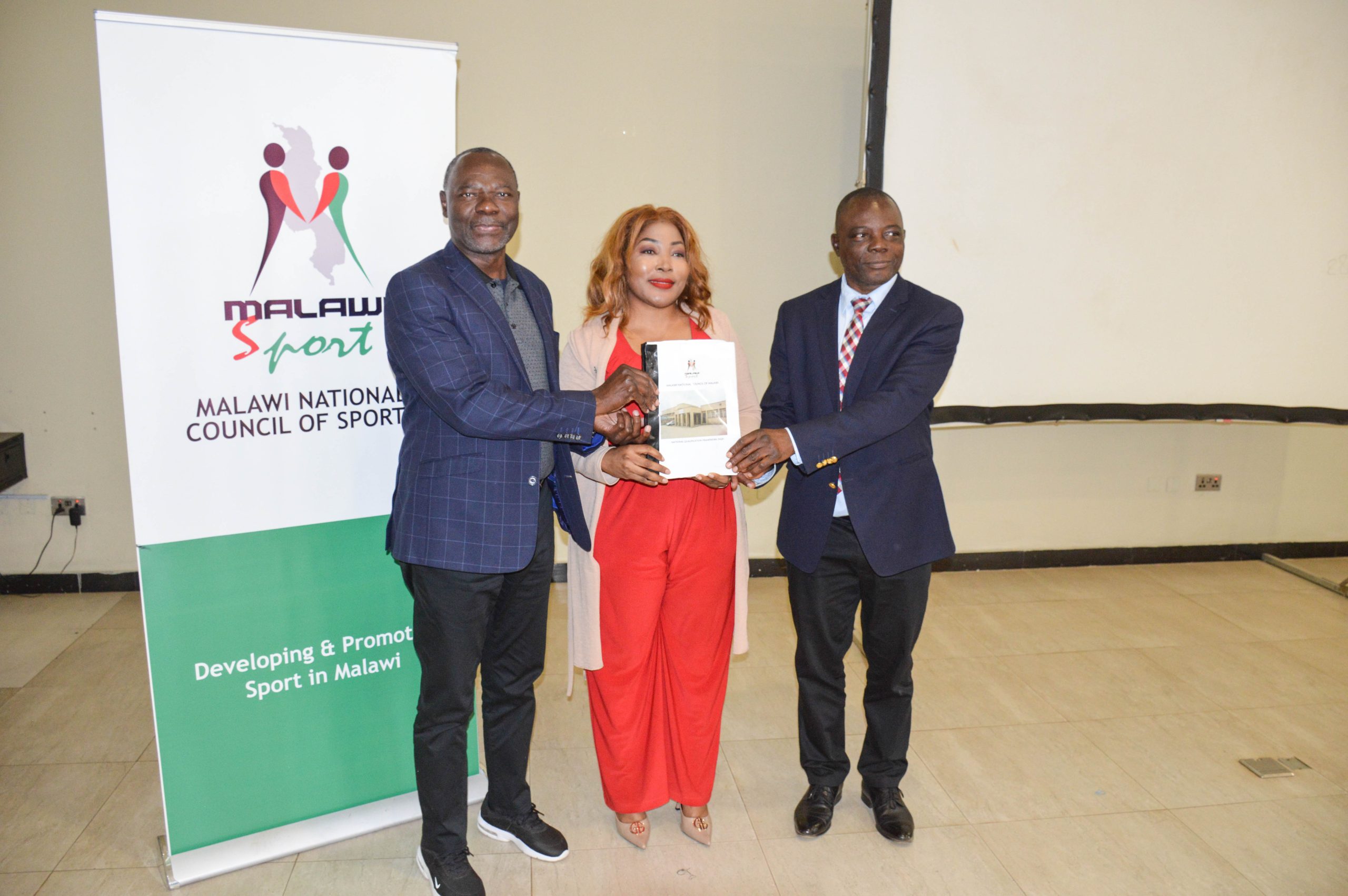
The Malawi National Council of Sports (MNCS) has launched the National Sports Qualification Framework (NSQF) at Sigelege Hotel in Salima, a groundbreaking initiative designed to address the long-standing challenges faced by coaches, technical officials, and sports administrators in developing athletic talent nationwide.
The NSQF represents a milestone in the professionalization and standardization of Malawi’s sports sector. It introduces nationally recognized qualifications and structured training pathways to ensure consistency, credibility, and quality in the delivery of sports programs.
Speaking during the launch, MNCS Chief Executive Officer Dr. Henry Kamata said the framework is designed to guide the systematic training of technical officials in Malawi’s sports industry.
“This is a training manual for various stakeholders in the sports sector. Historically, both the Malawi Government through the Malawi National Council of Sports and the Malawi Olympic Committee have made significant investments in building the capacity of sports personnel. Many individuals have attained high-level qualifications, including degrees in sports science and administration. Yet, when we look at the sports sector, we often don’t see these individuals making a visible impact,” Dr Kamata said.
He attributed this gap to politics within the sports system, which, he said, undermines the potential of trained personnel.
“The NSQF seeks to address this issue by standardizing training at a national level, ensuring that more people, especially those passionate about pursuing careers in sport can access credible training and be recognized for their qualifications,” he added.
The NSQF targets multiple groups across the sporting ecosystem, including: Young athletes aged 6 to 18, who form the foundation of Malawi’s sporting future, Coaches and technical officials, from grassroots to elite levels, Sports administrators, managing clubs, associations, and academies and Educational institutions offering physical education and sports-related programs.
Director of Sports in the Ministry of Youth and Sports, Mr. Jameson Ndalama, hailed the framework as a transformative step in the country’s sports development.
“This is a game-changer. If we are serious about developing sport in Malawi, we need to address several components: infrastructure, athletes, and most importantly, the quality of our coaches and technical personnel. We’ve made progress in talent identification and infrastructure, but capacity building has been a missing link. This framework will standardize training, guide talent development, and bring sanity into the system. Our coaches will now be classified into relevant levels, which also allows us to align with international standards and courses outside Malawi,” he said.
The framework also aligns with Malawi’s Vision 2063, particularly its pillars on Human Capital Development, Youth Empowerment, and Health and Wellbeing. It is expected to enhance excellence, integrity, and accountability in the sports ecosystem while providing a clear roadmap for career advancement in sports-related fields.
Special Olympics Malawi National Director, Enid Mauluka, welcomed the development, noting its importance for inclusive sports.
“At Special Olympics Malawi, we run several sporting codes, and we’ve often struggled to partner with mainstream associations for sport-specific training. This initiative is crucial for us because it will help our coaches gain proper training, which will improve athlete performance both locally and internationally,” Mauluka said.
In the long term, the NSQF aspires to establish a robust, inclusive, and sustainable sports development system. It is not only expected to nurture athletic talent but also to contribute to national development goals by creating professional career paths in sports, improving governance, and boosting Malawi’s standing on regional and international sporting platforms.